

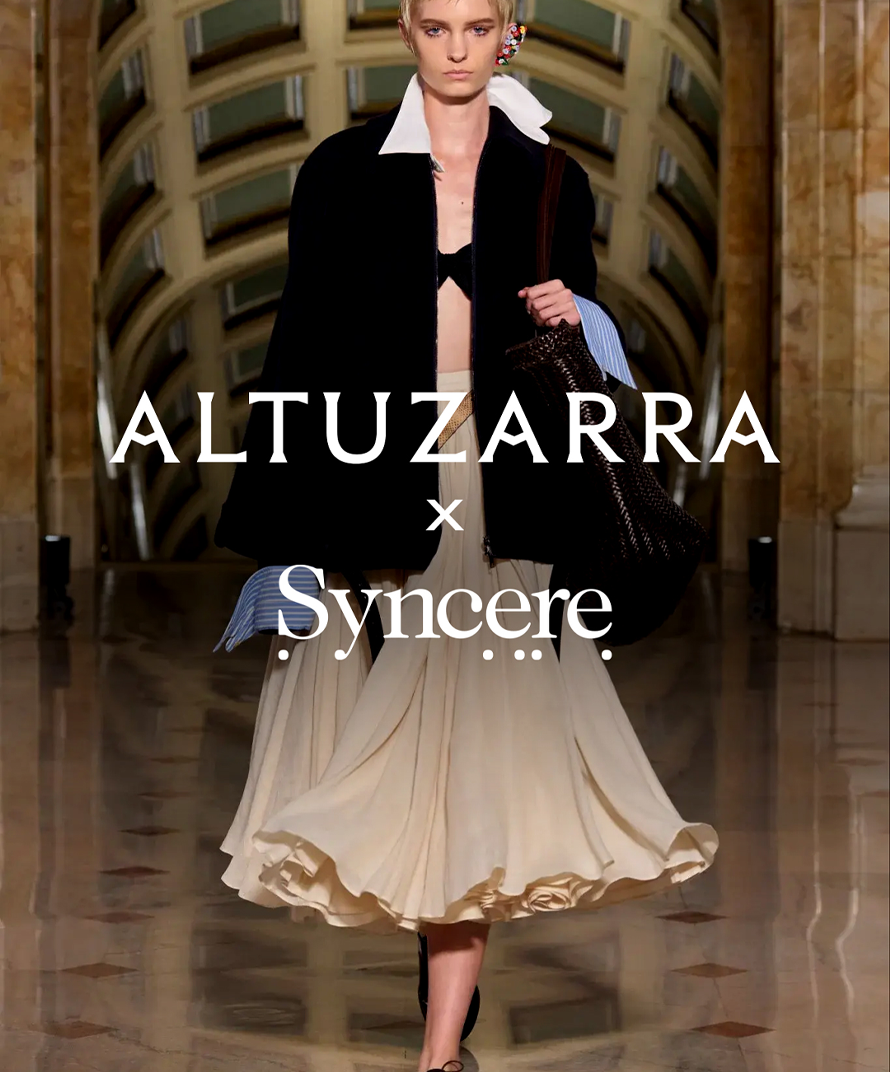
During New York Fashion Week, the most interesting design stories aren’t always confined to the runway. Sometimes, they unfold backstage—in the controlled choreography of fittings, last-minute adjustments, hair and makeup, and the countless details required to transform a creative vision into a show.
For Lombardo, a recent collaboration surrounding the launch of LUME, the robotic lamp from SYNCERE, became an opportunity to explore what happens when the worlds of fashion, home, technology and elevated design converge.
Rather than approaching Fashion Week as conventional product placement, Lombardo helped bring LUME into the working environment backstage, where it became part of the creative process surrounding Altuzarra and Advisry.
There, LUME did something unusual: it worked.
It assisted during preparation, provided functional light for hair and makeup, and demonstrated its ability to handle clothing—folding garments and supporting some of the essential, often unseen work surrounding a fashion presentation.
The setting offered a compelling counterpoint. An object conceived for the home suddenly found itself backstage at Fashion Week, surrounded by clothing, craft, beauty and creative energy. Yet it didn’t feel entirely out of place. LUME had been designed around precisely that idea: that advanced technology could take on useful work without looking or behaving like a conventional robot.
For Lombardo, the moment also represented something larger about the value of bringing seemingly different creative worlds together.
“Powerful collaboration happens when you bring together people and brands that see the world differently but share the same commitment to great design,” says Giuseppe Lombardo. “Fashion, technology and the home may appear to occupy separate spaces, but they all influence how we live. When those perspectives come together authentically, you can create an experience that none of the partners could have created alone.”
— Giuseppe Lombardo
That philosophy was visible backstage. Rather than simply displaying LUME, the collaboration gave it a role within an environment where utility, aesthetics and precision are equally important.
For Aaron Tan, founder and CEO of SYNCERE, that balance between beauty and usefulness is fundamental to the company’s vision. “We’re building technology that gives people time back,” Tan said at the New York Fashion Week introduction of LUME. The product folds laundry, makes the bed and then returns to functioning as a lamp—an approach designed to make robotics recede into everyday life rather than dominate it.
“Ultimately, we’re not trying to give people more technology,” Tan has said. “We’re trying to give them more time.”
— Aaron Tan
It is an idea that resonates particularly well within fashion, an industry built on both the visible and invisible dimensions of creativity. Audiences see the finished collection; backstage, hundreds of small actions make that moment possible. By stepping into that environment, LUME offered a glimpse of how technology might support creative work without competing with the people doing it.
The collaboration also reflects a broader shift in how consumers experience design. Fashion no longer exists independently of interiors. Interiors don’t exist independently of technology. The objects we choose for our homes increasingly communicate taste and identity in much the same way clothing does.
Lombardo’s role was to connect those worlds.
By placing an emerging piece of home technology alongside the creative environments of Altuzarra and Advisry, the collaboration gave each participant something valuable: a new context.
For SYNCERE, Fashion Week demonstrated that LUME could exist within a sophisticated design conversation rather than solely a technology one. For fashion, LUME introduced a vision of technology that is less about screens and machines and more about objects that quietly support the people around them.
And for Lombardo, the project became a demonstration of what the strongest collaborations can accomplish.
The most successful partnerships aren’t simply exercises in shared visibility. They bring together distinct disciplines, audiences and ideas to create something culturally relevant—and, ideally, unexpected.
Because when collaboration works, one plus one doesn’t simply equal two. It creates an entirely new possibility.